What Is a Photo Mosaic?
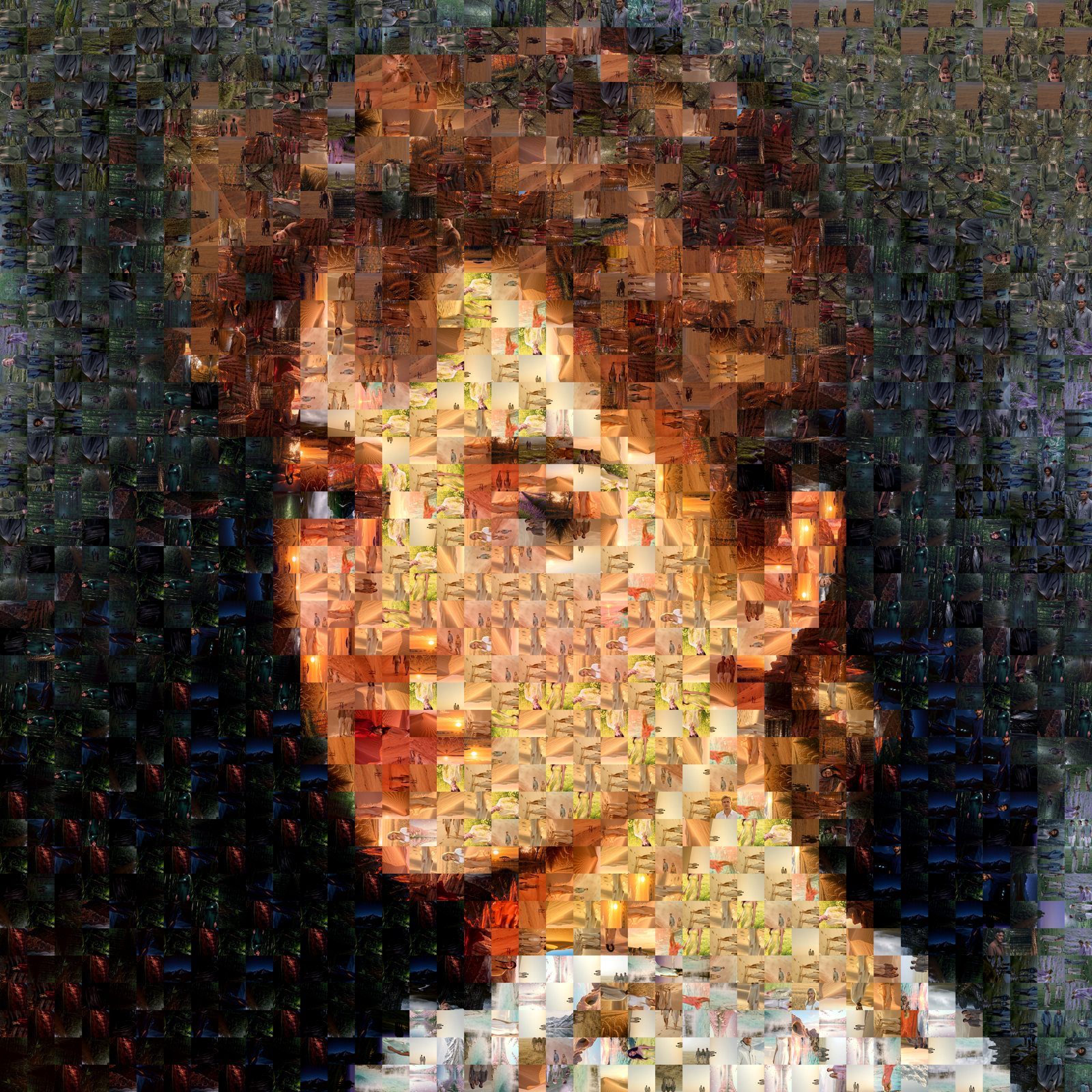
A photo mosaic is a large picture composed of hundreds or thousands of smaller photographs. From a normal viewing distance you see one image — a face, a landscape, a logo. As you step closer, the surface resolves into the individual photos that built it. That double reading is the entire point, and it is what separates a photo mosaic from every other photo product.
The Two-Distance Effect
Every photo mosaic is designed for two viewing distances. From across a room, your eye averages the small tiles together and the main image appears. At arm’s length, each tile is readable as its own photograph.
This is why mosaics are printed large and hung where people pass them: the first viewing delivers the subject, and every later viewing delivers the details.
Where the Form Comes From
Mosaic as a technique is ancient — stone and glass tesserae arranged into images go back thousands of years. The photographic version emerged in the 1990s, when computing power made it practical to compare thousands of photos against regions of a target image and place each one where it contributes most.
Since then the craft has moved from novelty to a mature discipline: matching algorithms, color management, cell geometry and arrangement optimization all measurably change the result.
What Separates a Real Mosaic from a Filter
Many tools fake the look by overlaying a tinted grid or blending thumbnails under a dominant main image. In a genuine photo mosaic, each cell is a complete photograph chosen because its content matches the region it occupies — the main image emerges from the tiles rather than being pasted on top.
The test is simple: zoom in. If the main image stays visible when you are close enough to read individual tiles, you are looking at an overlay, not a mosaic.
What You Need to Make One
Two things: one main image with a clear subject and strong contrast, and a collection of supporting photos to serve as tiles — the more varied in color and content, the better the matching. From there, software handles the analysis and placement, or a design service handles the whole project for you.